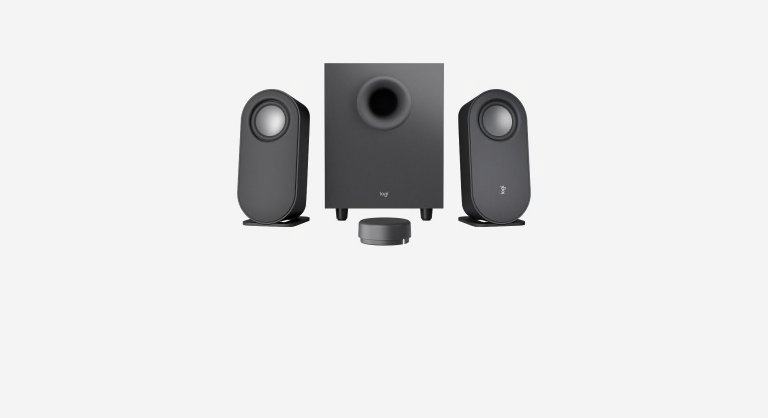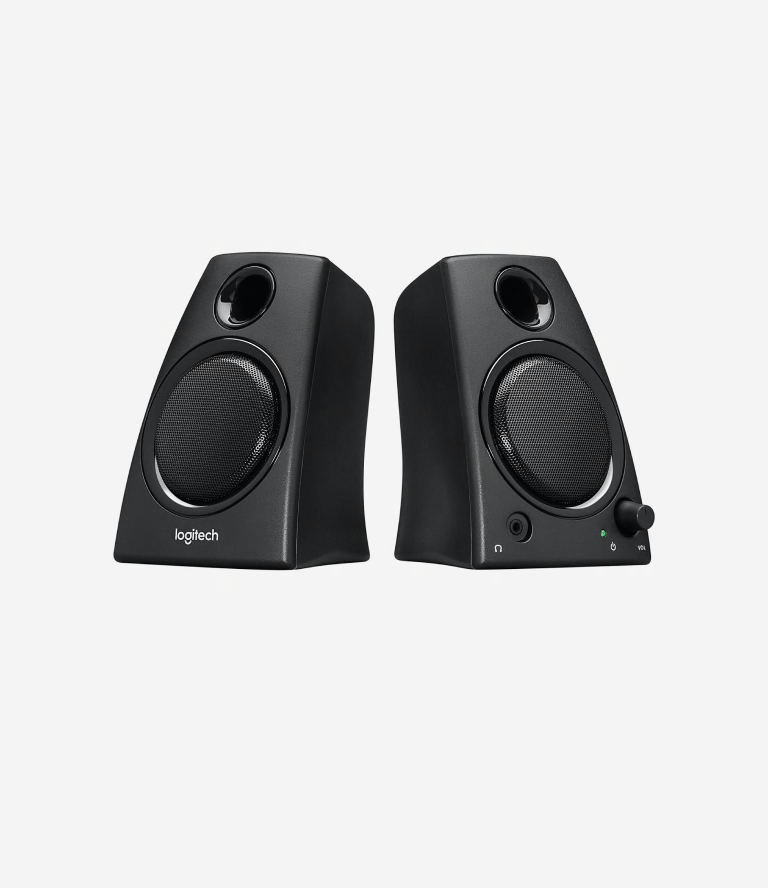
Logitech LS21 2.1 Stereo Speaker System
Balanced audio with plenty of bass in a compact speaker system for your PC.
A balanced act
Your ears are going to be happy—you get balanced sound with clear highs, rich mids, and deep lows.
Control in reach
When you want to crank up the volume or turn the music off, you just grab the handy wired remote.
Me-time
Don’t want the whole world to hear? A headphone jack lets you listen in privacy.
Compact speakers and a down-firing subwoofer give you balanced PC audio with plenty of bass.
Compact speakers
Two-inch high-excursion metallic drivers let you enjoy clear, quality sound in a compact size.Watt? Learn more about audio terminology and what it means for you.
Down-firing subwoofer
You’ll enjoy rich, deep bass that adds another dimension to your movies, music, and games.Satellite? Subwoofer? So what? Learn more about speakers.
Wired remote
Power and volume controls are easily within your reach.
Headphone jack
When you want to listen privately, you just plug in your headphones.
Cable management system
Your cables stay under control and your desk stays uncluttered.
Audio controls
There’s no need to use your computer to change the volume. The convenient audio controls make it easy.
Audio Glossary
2.0 speaker systemYour basic setup—two speakers, or satellites, that give you stereo sound with limited bass. These easy-to-install systems don’t include a subwoofer and are compatible with most standard PC soundcards. |
2.1 speaker systemA sound system that shakes some life into your audio. It has two satellites, like a 2.0 system—but adds a subwoofer to give you a more robust sound with deeper bass. It’s just as easy to set up as a 2.0 system, but the subwoofer takes up additional space. |
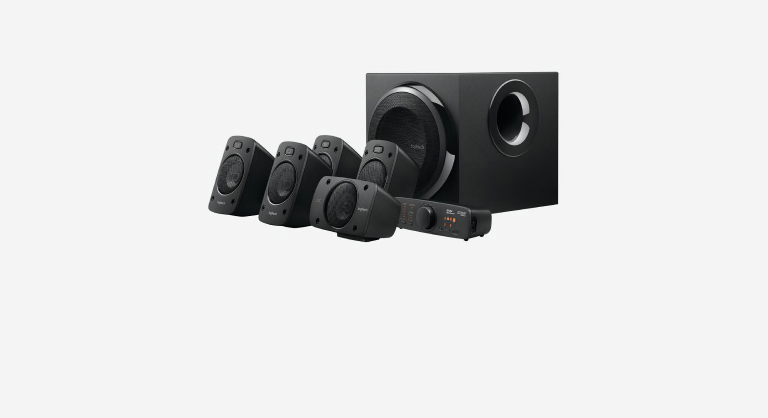
5.1 speaker systemA surround sound system with speakers in front of and behind you to immerse you in your entertainment. It includes left and right front speakers, left and right rear speakers, a front center speaker, and a subwoofer. If you’re into movies or gaming, this is the perfect choice for you. |
360-degree soundBalanced sound no matter where you are in the room. This is created by using both forward- and backward-firing drivers that project sound evenly in all directions. Also known as omnidirectional acoustics. |
6-channel directAn input with three separate stereo mini-plug jacks (1/8 inch) that connects to PC sound cards, or can be used as three separate stereo inputs for use with headphones, iPods, or other devices with an 1/8-inch jack or plug. |
96/24 decodingAn enhanced, higher-resolution, studio-quality format available on many DVD video and DVD audio discs. Refers to 24-bit, 96 kHz audio. |
AAAC (Advanced Audio Coding)A successor to MP3. It’s an audio codec or device that decodes or encodes digital data. It offers higher sound quality at lower bit rates than MP3. It’s also known as MPEG-4 AAC. |
Active driverThe main driver, or electromagnetic component, of a speaker. This is what makes the sound. See driver. |
Amplifier (Amp)A device that increases signal level. They typically increase voltage, current, or both. |
Analog signalA continuous electrical signal that’s commonly represented as an oscillating wave. It can take any value in a range and changes smoothly between values, as opposed to digital signals, which are characterized by discrete bits of information in numerical steps. |
Apple LosslessAn audio codec, or device that decodes or encodes digital data, developed by Apple Inc. This is a lossless method of data compression for digital music. See lossless. |
BBassThe low end of the sound spectrum that goes from 20 Hz to 200 Hz. It puts the boom, shake, and rumble into your entertainment. This is the range for explosions, tubas, cellos, bass, drums, and more. Also known as low range. |
CCenter channelThe center speaker in a surround sound system. It goes below or on top of your monitor or TV and produces the dialog and vocals—making them seem like they’re coming right out the screen. |
ClippingA severe form of distortion that occurs when you overload an amplifier. It makes the sound hard and edgy. |
DDAC (Digital to audio converter)A device that converts a digital bit stream to an analog signal so your speakers can turn it into sound. |
dBs (Decibels)A unit of measure of the relative loudness of sound. The threshold of hearing is 0 dB. A whisper is 15-25 db. A normal speaking voice is 65-70 dB. Live rock music is 120 dB and up. And a jet aircraft is about 140-180 dB. Anything over 140 dB hurts to listen to and can damage your hearing. |
Dead zoneAn area of the room with quieter sound from your speakers due to sound waves cancelling each other out. |
Digital signalAn audio signal that is usually represented by ones and zeros. A digital signal has to be converted to an analog signal before it can be turned into sound. |
Digital rights management (DRM)A technology that allows content owners to determine and control how you can enjoy content. That can include how many copies you can make of a song or what types of devices you can transfer it to. |
DistortionAnything that alters the musical signal from its original quality. |
Dolby® digitalA five-channel audio format consisting of left, center, and right front channels, left and right rear channels, and one channel for the subwoofer. It’s one of several systems used for surround sound. All processing is done in digitally for your listening pleasure. |
Down-firing subwooferA subwoofer that has its cone facing down—directing bass throughout the room. |
DriverThis is where the magic happens. It’s an electromagnetic device that turns electrical signals into sound waves in the air by moving a thin layer of fabric or paper. It’s usually made up of a magnet and voice coil. |
DTS™DTS decoders are in virtually every major brand of 5.1-channel surround processor. |
EEqualization (EQ)The purposeful changing of the frequency response of a circuit to change the sound. You might do this to boost the bass for gaming or movies. Or to create a more balanced sound for your music. |
FFLAC (Free Lossless Audio Codec)A type of lossless audio compression. It doesn’t remove any information from the audio stream like lossy codecs such as MP3 and AAC. That makes it a good choice for archiving audio collections as well as everyday playback. See Lossless, Lossy. |
FrequencyOne measure of a sound wave. Unless you’re superhuman, the range for hearing is about 20-20,000 Hz (20 Hz-20 kHz). Lower numbers represent lower frequencies |
Frequency Directed Dual DriversA Logitech® technology that uses two identical full-range drivers in each satellite. A special filter that detects specific frequencies is applied to one of the drivers—gradually muting specific frequencies in that driver as needed to prevent hot spots or dead zones in the soundfield. The result is better sound quality throughout the entire frequency range of the speaker. |
Frequency responseThe range of frequencies an audio device can reproduce. |
Full-range driversA driver designed to reproduce most of the sound spectrum. |
HHertz (Hz)The standard unit of frequency, equal to 1 cycle per second. One hertz (Hz) represents one cycle per second, 20Hz represents 20 cycles per second, and so on. |
High range (highs)The high end of the sound spectrum, also known as treble. The high range goes from 4,000 Hz to 20,000 Hz. It covers stuff like bells, cymbals, and the highest notes on a piano. |
Hot spotsAn area of the room where there volume gets too loud because the sound waves are amplified. |
IImpedanceA measure of electrical resistance specified in ohms. |
JJitterA tendency toward poor signal synchronization caused by electrical changes. It can cause doubling up or skipping of portions of audio. |
LLong-throw subwooferA subwoofer that gives you higher sound levels at greater distances. |
LosslessA class of data compression that allows the exact original data to be reconstructed from the compressed data. |
LossyA class of data compression that doesn’t allow the exact original data to be reconstructed from the compressed data. |
Low range (lows)See bass |
MMatched quad micro-driversA set of four identical micro-drivers, offering powerful sound in a compact design. |
Max-X™ driversHigh-excursion drivers that allow for greater dynamic range, improved bass, and lower distortion. |
Midrange (mids)The middle frequencies of sound from 200 Hz to 4,000 Hz. This is the range of sound our ears are most sensitive to and includes most vocals (not the glass-breaking kind) and instruments. |
MidwooferA driver that produces mid and some low frequencies. |
MP3A popular digital audio encoding and lossy compression format. It greatly reduces the amount of data (10:1 compression) needed to represent audio. See Lossy. |
MuddySound that is poorly defined, sloppy, or vague. |
NNetwork music playerA device that wirelessly streams the digital music stored on your computer, Internet radio broadcasts, and tracks from online music services to any room of your home. You can choose a player that connects to your stereo or powered speakers, or an all-in-one solution that has its own speakers. |
Neodymium micro-driversSmall drivers made from a rare earth metal that is the strongest permanent magnet on earth. |
NoiseUnwanted sound or distortion. |
Noise isolationPreventing outside sounds from entering the ear when you’re listening to music with earphones. It lets you hear your music and not the chatty person behind you. |
OOggA type of file format. |
OhmA unit of electrical resistance or impedance presented by the speakers and recognized by the amplifier. See Impedance. |
Omnidirectional acousticsSee 360-degree sound. |
PPassive crossoverA filter that splits the audio signal into separate bandwidths so each segment can go to the correct type of driver. It keeps the lows from mingling with the highs in your tweeter, for example. This type of filter is made of passive components. |
Peak powerThe maximum wattage an amplifier can deliver as a brief burst during a musical peak. This is not an accurate measure of power. RMS power, which is standardized, should be used when you compare speakers instead. |
PortAn opening in a speaker cabinet that increases the bass response of the speaker. |
Ported enclosure or ported subwooferA type of speaker enclosure that uses a port to improve efficiency at low frequencies. |
Pressure driversA driver that creates pressure inside a speaker cabinet that is sealed and airtight to move the passive radiator, increasing sound levels. This is an efficient way to create tighter, lower bass. |
RRMS (root mean square)A standard amplifier measurement. It’s a conventional way to measure the effective average value of an audio signal or other power (AC) voltage. |
RMS powerThe amount of continuous power, measured in watts, that an amplifier can produce. The higher the RMS figure, the louder and cleaner music sounds. This measurement is far more accurate than peak power. |
SSatellitesA small speaker with limited bass response. |
ShieldedA design that prevents the magnet from causing interference with other electronics. |
Signal-to-noise ratio (SNR)A specification that describes how much noise an audio component has compared to the music signal. |
Sound pressure level (SPL)A measure of the loudness of a sound, relative to the threshold of hearing, measured in dB (decibels). It generally goes from 0 to 140 dB. 140 dB is considered painful and can damage your ears. |
SoundstageThe perception of where the different instruments and vocals are located on an imaginary stage. |
StereoThe illusion of a continuous soundfield spread around the listener by two or more related audio signals. It’s often used to indicate that there are two channels. |
Stereo XLA Logitech® technology that widens the soundstage beyond the physical boundaries of the speakers, creating an immersive audio experience. |
SubwooferA speaker designed to reproduce very low frequencies (20-200 Hz). |
Surround soundMulti-channel audio playback that creates a three-dimensional sound that immerses you in your entertainment. It’s typically used for movies and gaming and makes you feel like you’re part of the action. |
TTHX®A series of specifications for surround sound systems. They’re designed to ensure that the sound of movies is as close as possible to what the filmmakers intended. |
Top-fire armatureA custom in-ear speaker design—featured in the Ultimate Ears® SuperFi 5 and 5vi earphones—that uses a compact wideband driver to create a high-performance sound. |
TrebleSee high range. |
Tri-amplificationA design in which each driver (woofer, midrange, and tweeter) has their own amplifier. This generally results in a better sound because the signals can be tailored for the driver more accurately before they get to the amplifier. |
TweeterA small, lightweight driver for reproducing the highest musical frequencies such as violins and cymbals, and typically everything above 2,000 Hz. |
Two-way speakerA speaker with two different drivers that are dedicated to different frequency ranges. |
VVirtual surround soundTechnology that provides a rich surround sound experience with just two speakers by down-mixing Dolby Digital 5.1 channel and Dolby Surround (Pro Logic) to 2-channel audio. |
WWAV (or WAVE)A Microsoft and IBM audio file format standard for storing audio on PCs. |
WattsA power measurement derived by multiplying current by voltage. It’s used to quantify an amplifier’s power output. |
WMA (Windows Media Audio)A proprietary compressed audio file format developed by Microsoft. |
WMA LosslessA lossless compressed audio file format developed by Microsoft. See lossless. |
WooferA driver that reproduces bass frequencies. It can be used in a subwoofer or a two-way or three-way speaker. |
What you need to know to make a sound decision about speakers.
Your computer gives you access to a world of music, videos, movies, and games. But in most cases, it doesn’t give you the quality sound you need to really enjoy all that. If weak, tinny audio isn’t your thing, you’re going to need some new speakers. Read on to figure out what kind of system is right for you.
Good sound all aroundMost speakers systems are designed to sound their best when you’re sitting right in front of them. Our speakers with 360-degree sound, on the other hand, have forward- and backward-facing speakers. So you can get up and move around—even dance a little—and your music will sound great everywhere. |
Portable palsCraving better sound you can move around with? Portable notebook speakers are compact and lightweight enough to tag along with you and your notebook wherever you go. |
Surrounded by soundIf you want to get sucked into your entertainment, a 5.1 surround sound system is just what you’re looking for. Two front satellites, a center channel speaker, two back satellites, and a subwoofer immerse you in your games, movies, and music—putting you smack dab in the middle of the action. |
Bring on the bassBring on the bassA subwoofer shakes some life into your movies, music, and games by adding in deep bass. To get everything from a little boom to a house-shaking rumble, you’re going to want a 2.1 speaker system—that’s two satellites and a subwoofer. |
Just the basicsLooking for richer sound and more volume when you listen to music or watch videos online? A 2.0 speaker system may be all you need. It’s made up of two small speakers called satellites. They’re simple to set up and don’t take up a lot of space. |
System Requirements
-
- Computer with a soundcard
- A music source, such as a CD, DVD, or MP3 player
Package Contents
- 2 satellite speakers
- 1 subwoofer
- Wired remote
- 2-year limited hardware warranty
- Quick-start guide
Part Number
- PN 980-000058
Technical Specifications
- Total FTC power: 7 watts RMS
- Subwoofer: 4 RMS (into 4 ohms, @ 1 kHz, @ 10% THD)
- Satellites: 1.5 RMS x 2 (into 4 ohms, @ 1 kHz, @ 10% THD)
- Total peak power: 14 watts
- Drivers:
Satellites: 2-inch high-excursion metallic drivers
Subwoofer : 4-inch Max-X™ high-excursion subwoofer - Speaker dimensions (H x W x D):
Satellites: 5.8” (145.9 mm) x 3.4” (84.9 mm) x 3.2” (81.7 mm)
Subwoofer: 8.4” (19 cm) x 5.5” (14 cm) x 7” (17.8 cm)
Audio Support
Looking for information about a Logitech speaker dock, Squeezebox or other audio product? Our online resources can help you with tips, troubleshooting, replacement parts and more. Learn more


Change Location