Here’s the reality: complexity isn’t going away soon.
We can talk about hardware, machine learning, AI, and how the workplace has changed. But no matter which angle you take, the outcome is the same: office environments are getting more complicated and increasingly difficult to manage at scale.
If it’s not the complexity of AI and how it plugs into security, governance, and the daily grind, it’s the sheer number of spaces and devices companies now have to manage. Pre-pandemic, a lot of companies had multiple buildings and maybe a single video room. Today, things have significantly changed. I have spoken to customers with thousands of rooms, some in excess of 20,000 video rooms. Yes, Twenty Thousand. That’s not a small support model adjustment — that’s a completely different world.
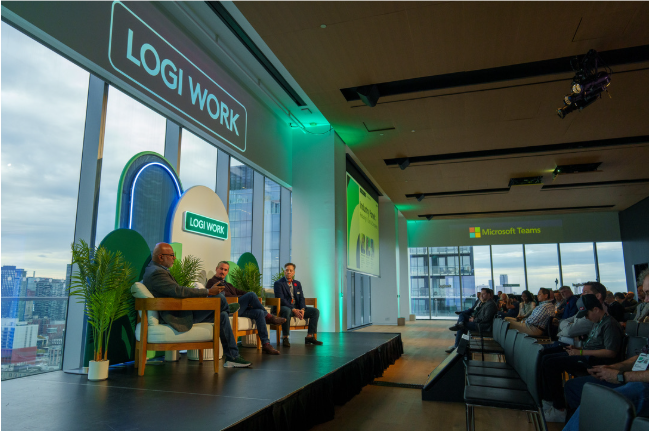
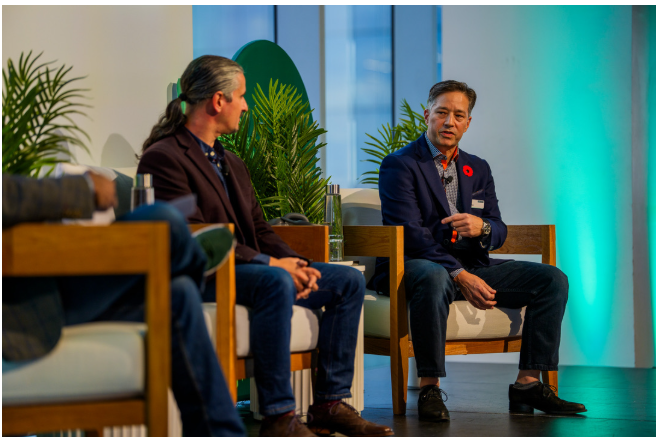
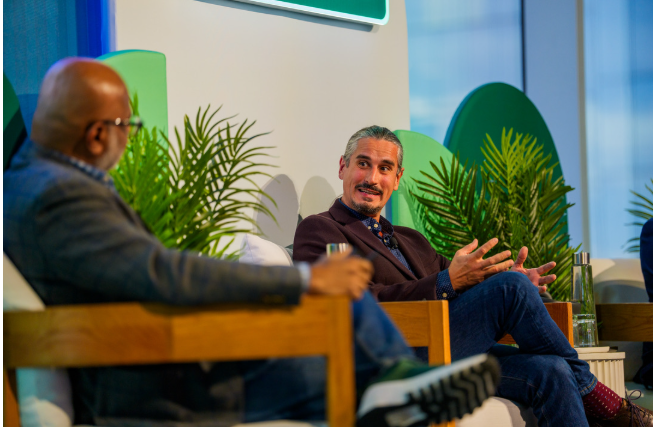
So yes, everyone is trying to make things easier. But making it easier at scale is hard. It takes planning, standards, coordination, and honestly, a lot more discipline than people think. And this is why we talked about this topic in great detail at Logi Work Toronto on November 4, 2026. We were joined by [TAG]Daniel Thomas from Ontario Power Generation and [TAG]Dale Maruno from Questrade Financial Group, and this blog summarizes that great discussion. Let’s dive in.
Everyone Wants Simple. However, Simple Can Be Hard.
The first tension is the one we all know: everybody wants things to be simple.
People want to walk into a room, hit a single button, and have everything work magically. They want new tools to be intuitive. They want AI to help make them better, not create additional risk. They want IT and AV to support everything, without adding friction.
That all sounds great. The problem is that the backend infrastructure and operations are getting more complex by the day.
There are more applications. More platforms. More AI tools. More devices. More protocols. More expectations. And the people supporting all of it are also being asked to do more than ever before.
The old job descriptions don’t really apply anymore. The IT person or AV specialist who used to focus on one domain now has to think about networking, security, supportability, user adoption, automation, and increasingly, AI policy too.
So the question becomes: how do you balance all of that complexity with a user experience that still feels simple? How do you make the tech invisible to the users?
One of the best answers we heard was this: you may not be able to remove the complexity, but you can pull it out of the room.
That’s the goal, but it’s also something to double-click on.
If the complexity hits the end user during the meeting, the call, or the moment they’re trying to get work done, then you’ve already lost. The work of reducing complexity has to happen earlier — in the design, planning, standardization, and decisions made before anything gets deployed.
The Earlier You Get Involved, the Better the Outcome
This comes up all the time, and for good reason.
The organizations that have the best outcomes are the ones where IT and AV are involved early; when the project is still on paper, rooms are still being designed, and requirements are still being defined. That’s when you can actually shape the outcome.
However, if you wait until the building is complete and then say, “Okay, now let’s add meeting rooms,” you’re already behind. At that point, you’re trying to force a solution into a space that may not have been designed for it. Maybe the acoustics are wrong. Maybe the layout is wrong. Maybe the furniture looks beautiful but completely breaks the experience. Maybe somebody bought a display that works fine at home but isn’t designed to work properly in an enterprise environment. This happens a lot more often than you may realize.
Those are the problems that seem small until you have hundreds or thousands of rooms.
And once you scale, every bad decision multiplies and it seems harder to take control of it all.
That’s why getting involved early matters so much. Not because IT or AV wants to control everything, but because the sooner you bring in the right people, the easier it is to make smart decisions that hold up over time.
Standards Matter More Than People Want to Admit
A lot of complexity comes from too much variation.
Too many device types. Too many room designs. Too many exceptions. Too many “just this one time” decisions that eventually turn into an environment nobody can support cleanly.
One of the smartest things teams can do is build realistic standards.
That means having an approved equipment list. It means knowing what technologies you’re willing to support. It means defining the network and security requirements up front. It means reducing the number of things your teams have to learn, troubleshoot, and maintain.
Yes, it reduces choice. But that’s not always a bad thing.
If your support teams only need to learn three or four core technologies instead of a hundred, your support model gets better. Your training gets easier. Your knowledge base becomes more useful. Your rooms become more consistent. And the user experience gets better because people know what to expect.
That’s not limiting innovation. That’s giving scalability a fighting chance.
Process Optimization Is Just as Important as Technology
Another thing that stood out to me is that reducing complexity is not just about buying better products.
A lot of it comes down to process.
If you can get rid of unnecessary steps, unclear ownership, and one-off decisions, you reduce complexity before technology even enters the picture. And for the complexity you can’t fully remove, that’s where automation starts to matter.
That’s really the mindset: optimize first, automate second.
Not everything can be simplified. But a lot of repetitive, operational complexity can be managed much better if you stop treating every issue like a one-off and start designing systems around repeatability.
That’s how mature teams operate.
The Right People Need a Seat at the Table
This is a big one; and one that comes up often.
As room technology, sensors, environmental controls, and workplace systems all start overlapping, the question of ownership gets messy rather quickly. Who owns the room? Who owns the sensors? Who owns the user experience? Facilities? HVAC? IT? AV? Employee experience? Real estate? HR?
The answer is usually: some undocumented combination of all of them.
And that’s exactly why these projects have to be collaborative from the beginning.
The best examples of successful projects come from teams that were brought in at project inception, when vendors worked directly with IT and contractors, requirements were discussed early, and technology wasn’t treated like an afterthought. Those are the projects that tend to land better with the business.
The worst outcomes usually happen when one group makes all the decisions in isolation and everyone else is left trying to catch up later.
We’ve all seen that movie before. It doesn’t end well.
AI Is Exciting, and It Deserves More Discipline Than Hype
Of course, no conversation today is complete without AI.
The conversation around AI is messy right now because it’s showing up everywhere. Transcription, summarization, search, assistants, agents, automation – it’s across almost every toolset already. The question is no longer whether AI is coming. It’s already here.
The real questions are:
- Which tools do you trust?
- How do you know your data is safe?
- What gets approved and what doesn’t?
- How do you help users adopt it responsibly?
- Where do you use it carefully, and where do you hit the brakes?
That’s the part a lot of organizations are still working through.
There’s clearly real value in AI. Used well, it can help surface patterns humans miss, improve monitoring, help support teams work faster, and make systems more proactive.
But it also introduces risk, especially in highly regulated environments.
So the right approach isn’t blind adoption, and it’s not total avoidance either. It’s thoughtful adoption. Governance. Guardrails. Clear use cases. Clear ownership.
In other words: treat AI like a tool, not a magic trick.
What Gives Us Optimism
We’re optimistic that more organizations are starting to approach this the right way.
They’re building better processes, standardizing where it matters, involving the right people earlier, taking governance more seriously, and thinking about scale before the environment becomes unmanageable.
And they’re also recognizing that this isn’t just about technology anymore. It’s about how people work, how businesses operate, and how systems come together in a way that actually makes sense.
The goal is not to eliminate every layer of complexity, but to design environments where the complexity is handled behind the scenes, so the experience in front of the user feels easy, intuitive, and reliable.