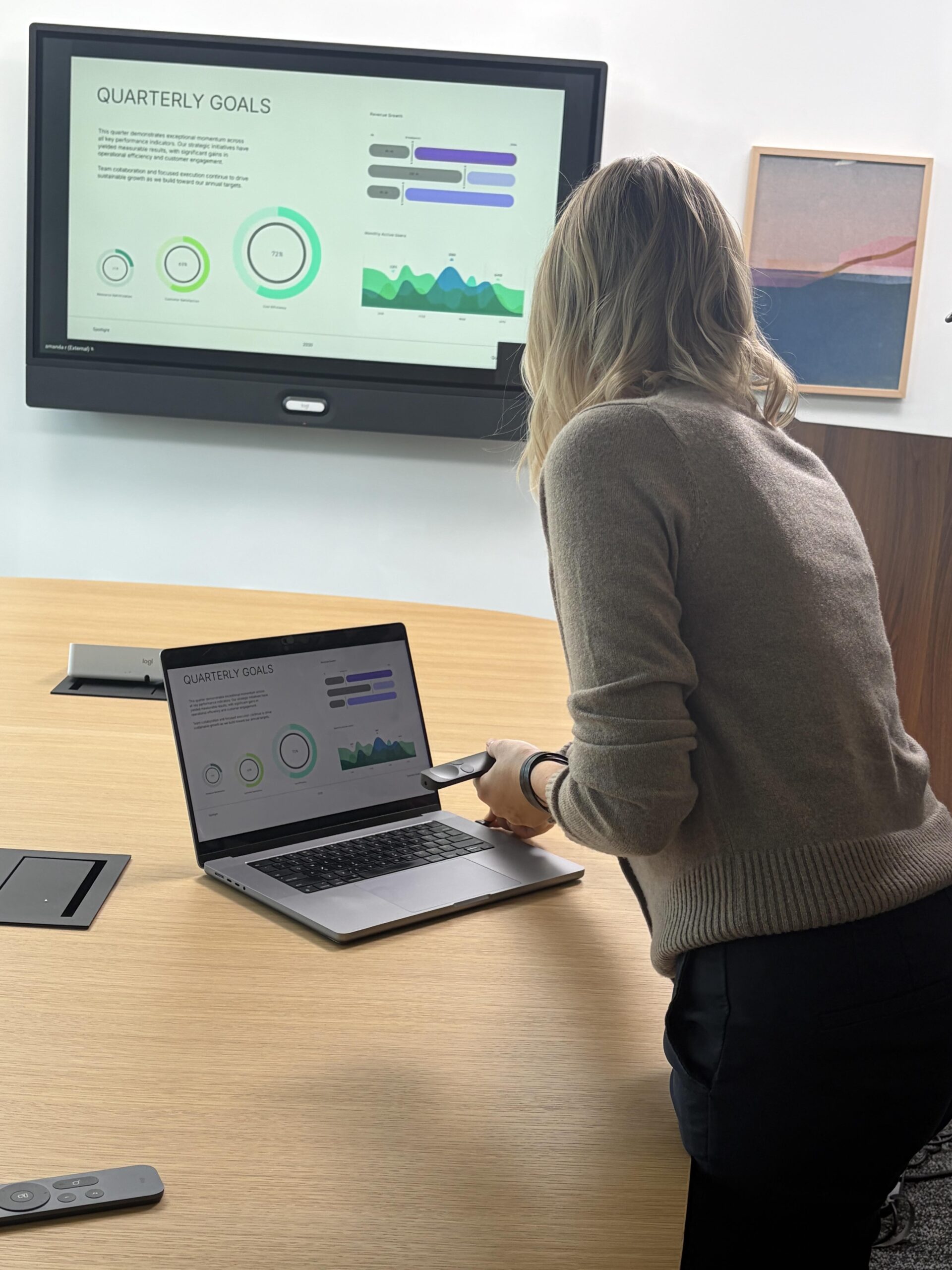
If you’ve ever had your heart race, your palms sweat, or your voice shake right before standing up to give a presentation, you are far from alone. Public speaking is routinely ranked as one of humanity’s greatest fears. In fact, when we dug into the data during the development of our latest advanced presenter, Spotlight 2, the numbers confirmed exactly what so many of us feel: 64% of people admit to feeling incredibly nervous before a presentation.
As a product manager, I believe true success isn’t just about the features we ship, but the meaningful problems we solve. It goes beyond meeting technical benchmarks—it’s about deeply understanding the mindset of the people using what we build.
When we set out to build Spotlight 2, I kept coming back to that 64%. How could a piece of technology not just help you click through slides, but actually support your well-being in that high-stress moment right before you step on stage?
The answer lay in something invisible, yet deeply felt: haptics.
From Vibration to Mindful Waves
We didn’t start from scratch. The original Spotlight had a basic vibration feature, but there was room to improve upon it. You would get a buzzing reminder that time was up, rather than a seamless extension of your hand. We also noticed from user data through our software that people weren’t utilizing the highlighting effects as much as we’d hoped because the button layout felt a bit disconnected.
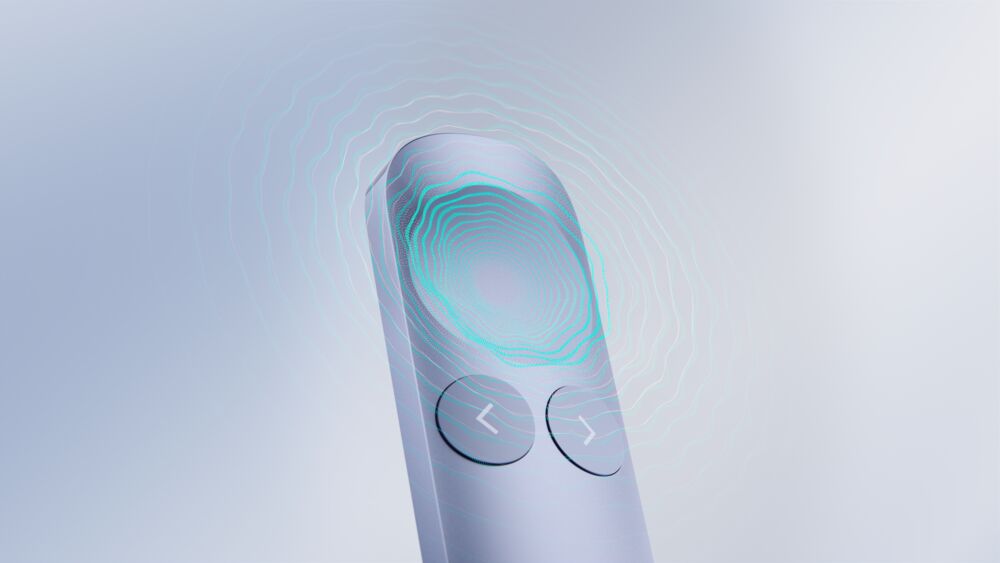
For Spotlight 2, we changed the game. We designed a larger, much more intuitive highlighting button with built-in force sensing, pairing it with silky-smooth, sophisticated haptic feedback.
This design overhaul reflects our broader goal for Spotlight 2—to tackle presentation stress from two distinct angles. We wanted to help calm your nerves before you step into the room, and then back that up with the absolute control you need during your performance. By pairing an intuitive UI with advanced new highlighting effects and seamless customization, the result is a design that acts as a natural extension of your hand, inviting you to engage effortlessly with the audience.
In the last few years, we’ve seen a massive cultural shift toward wellbeing, mindfulness, and devices that help us cut through digital noise to focus. With that philosophy guiding us, we didn’t stop at the presentation itself. We started asking: what about the 10 minutes before the presentation?
Around the time we were brainstorming how to address this, I noticed how much I depended on relaxing, rhythmic music and a yoga practice to keep my mind focused. It made me ask: why can’t our technology do the same thing? We realized we could create a rhythmic, guiding sensation to help presenters calm their heartbeat and find their focus before stepping on stage.
Engineering a Deep Breath
That realization sparked a beautiful, cross-functional journey. Our team began exploring how to build a literal breathing experience right into the presenter.
We collaborated closely with the MX Master 4 team, who was also working on haptics, sharing UX knowledge and haptic data. We obsessed over creating unique haptic waveforms, sensations that didn’t feel like a harsh phone buzz, but rather a gentle, rising and falling pulse.
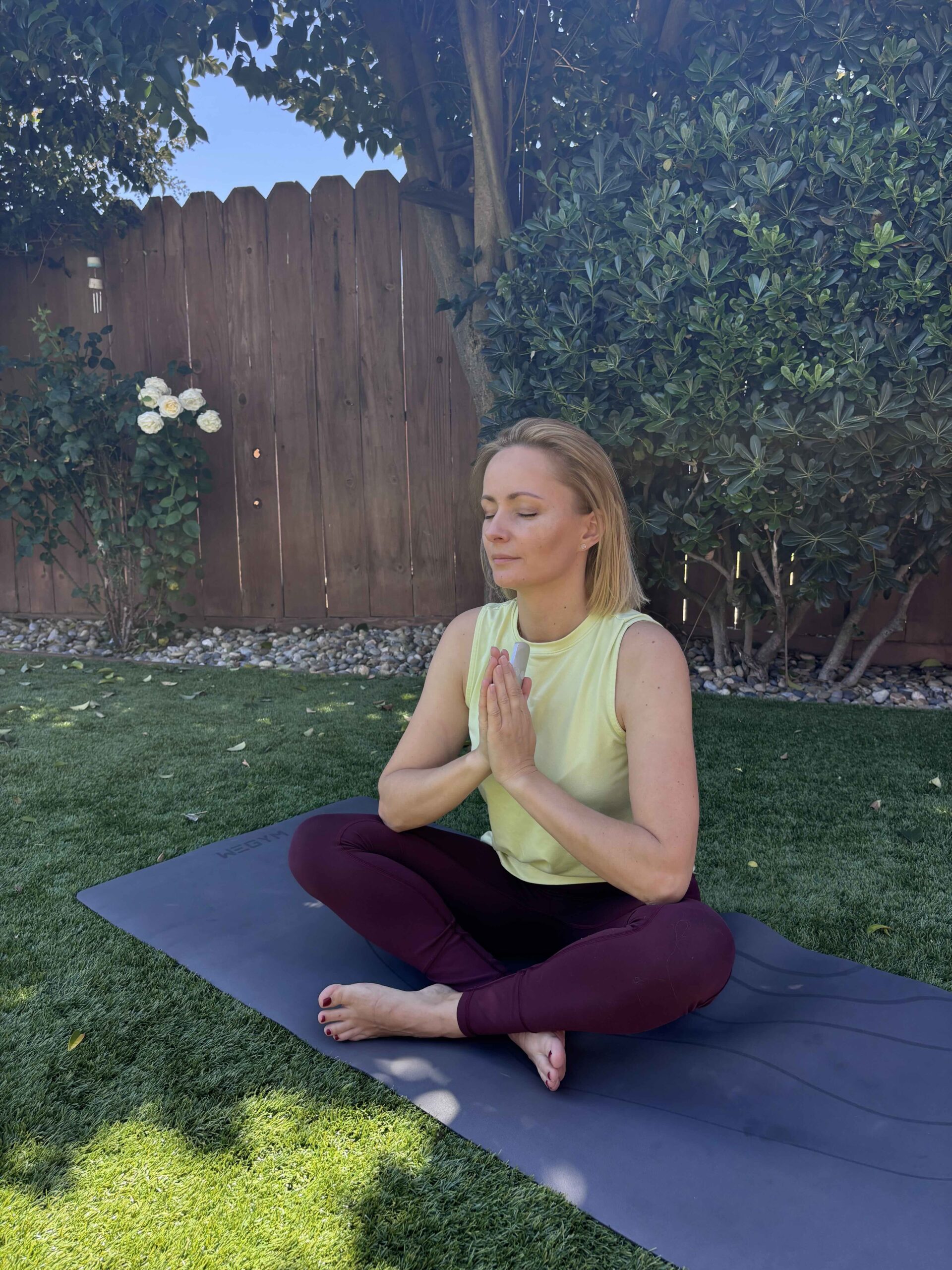
The result? Before you walk into your next big meeting, you can hold Spotlight 2 in the palm of your hand, close your eyes, and let the quiet, rhythmic haptic waveforms guide you through a calming box-breathing exercise. It gently prompts your nervous system to drop the cortisol, slow the heart rate, and bring you back to center.
We’ve taken an experience that usually triggers performance anxiety and turned it into an anchor.
The Human Impact
Bringing this to life on a tight schedule required an incredible amount of hustle from our internal engineers and external partners. But seeing the final product—a beautifully sleek piece of hardware that acts as a bridge between productivity and mental wellness—makes every tight deadline worth it.
As we launch Spotlight 2, success, to me, looks like a user who feels proud and confident using it each time, knowing it is a device that this user can completely trust to help engage with the audience and stay focused.
Technology should serve the whole person. With Spotlight 2, I really think we’ve taken a beautiful step closer to that ideal.